
If you own or manage a building in the UK, you may be wondering whether the law requires you to install a lift. The short answer: not always, but more often than people assume. No single piece of legislation states that every building must have one, but several overlapping laws can make a lift either a legal requirement or a practical necessity.
Here’s where you actually stand.
The Equality Act 2010
The Equality Act 2010 is the central piece of legislation on accessibility. It replaced the Disability Discrimination Act 1995 and brought earlier rules together under a single framework.
The Act places a duty on service providers, employers, and organisations open to the public to make reasonable adjustments so that disabled people are not put at a substantial disadvantage compared with non-disabled people.
If a disabled person cannot access part of your building because there is no lift, and installing one would be a reasonable adjustment, you could be legally required to provide it.
What counts as "reasonable"?
The Act doesn’t give a fixed definition. Courts and tribunals weigh several factors:
- The cost relative to the organisation’s size and resources
- The practicality of making the change
- How far the adjustment would actually remove the disadvantage
- The nature of the building, including any heritage or structural constraints
- Whether other adjustments have already been made
A large commercial landlord with a multi-storey property is far more likely to be expected to install a lift than a small charity in a listed Victorian townhouse. Inconvenience on its own is not a defence. If someone makes a reasonable adjustment request and you can’t justify refusal, a discrimination claim becomes a real possibility.
Building Regulations: New Builds and Major Works
The Equality Act applies to existing buildings and existing organisations. Building Regulations come into force when you construct a new building or carry out significant work on an existing one.
Approved Document M of the Building Regulations covers accessibility. Depending on the building’s type and use, the guidance can effectively make lift access necessary:
- New blocks of flats with storeys above the entrance level are typically expected to provide lift access under current Approved Document M guidance.
- New non-residential buildings such as offices, shops, restaurants, and public venues must meet accessibility standards. In multi-storey buildings, this usually means installing a lift.
- Changes of use, for example converting commercial premises to residential, generally require the building to be brought up to current Part M standards where reasonably practicable.
Part B (Fire Safety) and Part K (Protection from Falling) also have implications for lift design and placement.
Anyone planning a major renovation or change of use should bring in a specialist early. Getting it wrong tends to mean expensive retrofitting later.
Workplace Duties
Employer obligations sit primarily within the Equality Act. If you have disabled employees, you are required to make reasonable adjustments so they can do their jobs effectively.
If a member of staff uses a wheelchair or has a mobility impairment, and their workstation or other key areas are only reachable by stairs, providing lift access may be the right adjustment. That could mean installing a passenger lift or platform lift, refurbishing one that’s no longer reliable, or reorganising the workspace.
Failing to act when an adjustment would be reasonable and practicable can lead to employment tribunal claims and lasting reputational harm.
LOLER and PUWER: Existing Lifts
If your building already has a lift, two sets of regulations govern its ongoing use.
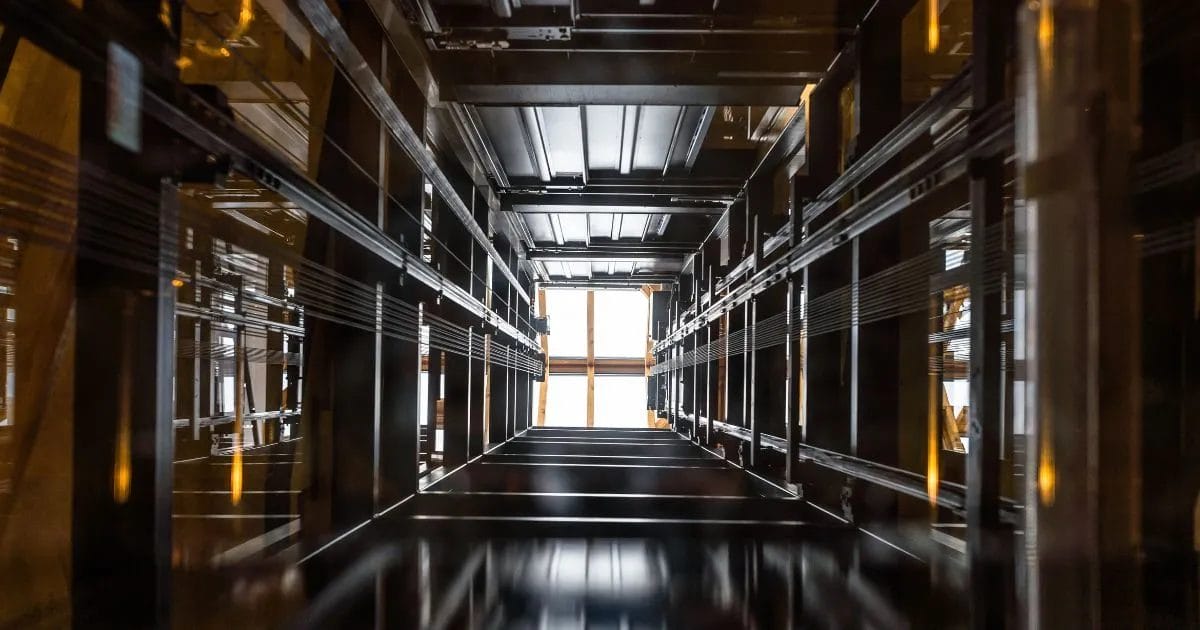
LOLER (the Lifting Operations and Lifting Equipment Regulations 1998) requires that lifts carrying people undergo a thorough examination at least every six months by a competent person. Results must be recorded and any defects addressed. Non-compliance is a criminal offence.
PUWER (the Provision and Use of Work Equipment Regulations 1998) requires employers to ensure work equipment, including lifts, is safe, fit for purpose, properly maintained, and inspected.
The combined effect is straightforward: if you have a lift, you must keep it safe and inspected. A neglected lift is both a safety risk and a legal liability.
Our inspection and maintenance services at Vertical Lift Services are built around full LOLER and PUWER compliance.
Listed Buildings and Heritage Sites
A common question we get is whether listed status exempts a building from accessibility duties. It doesn’t. Listed building consent is required before altering certain features, but that doesn’t override your obligations under the Equality Act or Building Regulations.
The task is to find solutions that protect the character of the building while improving access. That’s usually more achievable than people expect. Platform lifts, through-floor lifts, and compact hydraulic lifts can often be installed with minimal structural impact, and several manufacturers produce models designed specifically for heritage settings. Historic England’s Easy Access to Historic Buildings guidance is a useful starting point if you’re working with a sensitive property.
The right partner matters here. We’ve installed lifts in hotels, healthcare facilities, and other complex environments, and we’re used to finding workable solutions in sensitive buildings.
Consequences of Non-Compliance
The penalties for getting this wrong are not trivial.
Discrimination claims under the Equality Act have no upper compensation limit, and tribunals have awarded substantial sums in serious cases. Beyond the financial cost, the reputational damage from a public discrimination case can persist for years.
Building Regulations breaches can result in enforcement notices, orders to undo non-compliant work, and prosecution in serious cases.
LOLER breaches are criminal offences that can be prosecuted by the Health and Safety Executive. If someone is injured because of a poorly maintained lift, the legal and human consequences can be severe.
Where to Start
- Identify your duties. Are you a service provider, an employer, or both? Each role carries its own obligations.
- Assess accessibility. Can a disabled person reach all the relevant parts of your building? If not, what’s blocking access, and what could change?
- Get a professional survey. A lift specialist can advise on what’s feasible, what it would cost, and how it compares with other adjustments.
- Check your existing lift. When was the last thorough LOLER examination? Is maintenance current? Are there any outstanding defects?
- Don’t wait for a complaint. The Equality Act duty is anticipatory, meaning you should be planning for accessibility before anyone asks.
How We Can Help
Vertical Lift Services is based in St Helens and Manchester and covers the North West and beyond. Our engineers work across the full range of building types and lift systems, from passenger lifts in commercial premises to bespoke platform lifts in heritage settings.
Our services include installation, maintenance, LOLER-compliant inspection, refurbishment, and emergency repairs. We’re available 24/7.
If you’d like a no-obligation conversation about your building, call us on 01744 395028 or get in touch online.
